How Georgia Traffic Patterns Affect Your Rideshare Earnings
Traffic is one of the biggest variables Georgia rideshare drivers deal with every day. A trip that looks attractive on the app can become much less efficient when congestion turns a 20-minute drive into a 40-minute trip.
For Uber and Lyft drivers, traffic affects more than just travel time. It can influence pickup efficiency, fuel consumption, mileage, the number of trips you can complete, and how much time you spend sitting between requests.
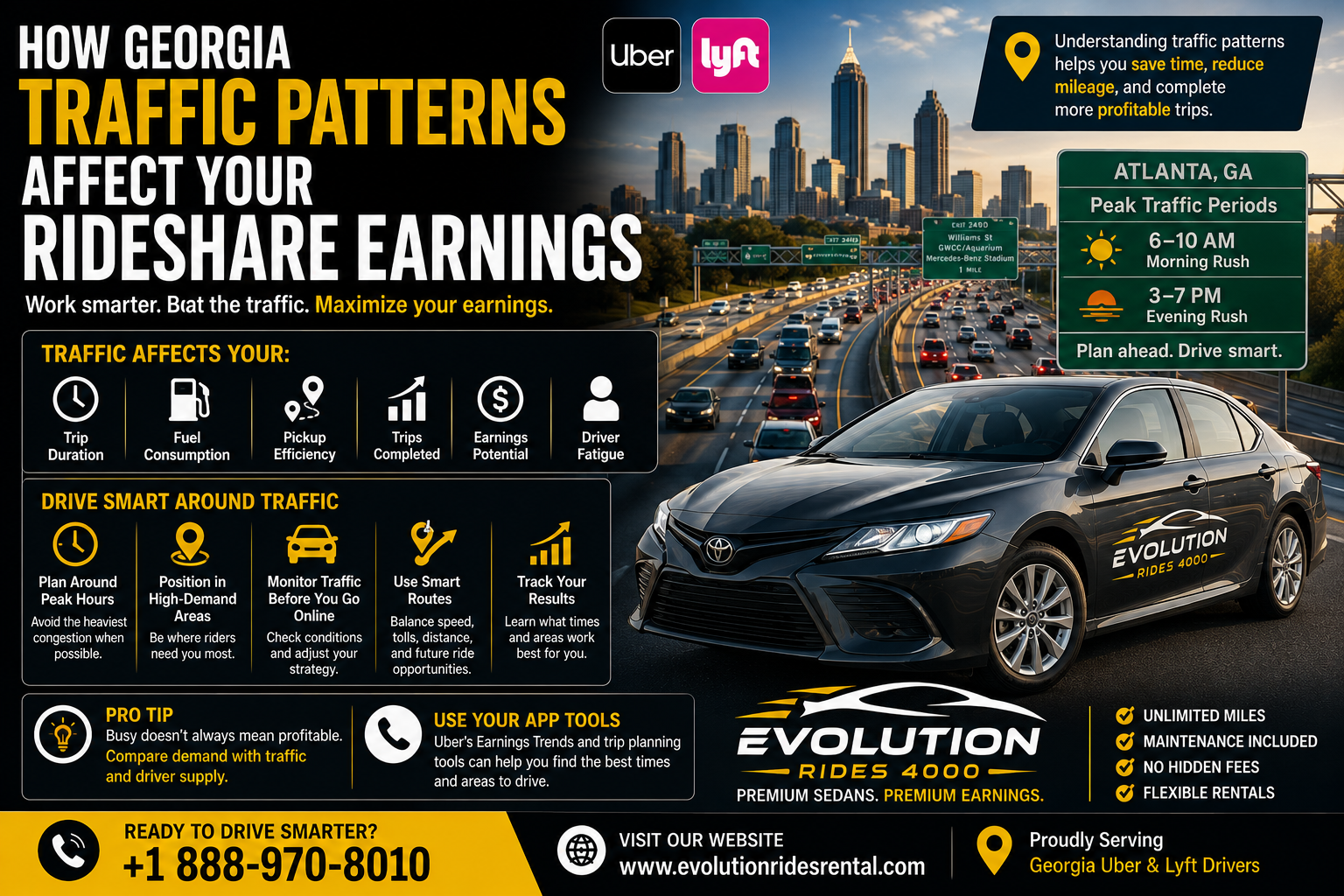
This is particularly important around metro Atlanta, where Georgia DOT identifies major morning and afternoon peak periods. Its current performance dashboard tracks highway peak-hour speeds from 6–10 AM and 3–7 PM, highlighting how congestion is concentrated during these periods.
The key is learning how to work with Georgia's traffic patterns instead of simply reacting to them.
🚦 Why Traffic Matters to Rideshare Drivers
Traffic can affect several parts of your driving operation:
Pickup times.
Trip duration.
Fuel consumption.
Number of trips completed.
Empty mileage.
Passenger wait times.
Driver fatigue.
Overall earnings efficiency.
Uber says trip pricing can take factors such as traffic patterns, distance, trip duration, rider demand, destination activity, and pickup distance into account.
That means traffic isn't simply an inconvenience—it can directly influence the economics of your driving day.
👉 Key takeaway: The amount of money you earn isn't the only thing that matters. How much time and mileage you spend earning it matters too.
🕐 Understanding Georgia's Traffic Patterns
🌅 Morning Rush: 6 AM–10 AM
Georgia DOT identifies 6 AM–10 AM as a major morning peak period.
During this period, you may encounter increased movement toward:
Business districts.
Downtown areas.
Major employment centers.
Schools and universities.
Transportation hubs.
For rideshare drivers, morning demand can be attractive because people need transportation to work, appointments, and other destinations.
However, congestion can also increase pickup and trip times.
How to Handle Morning Traffic
Consider:
Starting before the heaviest congestion develops.
Positioning yourself near areas with consistent morning activity.
Monitoring traffic before accepting longer pickups.
Allowing extra time for airport and business-district trips.
Avoiding unnecessary repositioning.
🌆 Afternoon and Evening Rush: 3 PM–7 PM
Georgia DOT also identifies 3 PM–7 PM as a major afternoon/evening peak period.
This period can bring:
Commuters heading home.
School-related traffic.
Airport traffic.
Shopping trips.
Restaurant activity.
Event-related congestion.
The demand opportunity can be strong, but congestion can also make short trips surprisingly time-consuming.
👉 Pro Tip: Don't automatically assume that a busy period means every ride will be profitable. Compare demand with traffic and driver supply.
🚗 How Traffic Can Reduce Your Efficiency
Imagine two rides:
Ride A
$20 fare
10 miles
25 minutes
Ride B
$20 fare
8 miles
45 minutes because of congestion
The fares are identical, but the second ride consumes substantially more time.
That's why experienced drivers pay attention to time as well as distance and earnings.
Uber's own driver tools now provide information intended to help drivers compare earning opportunities by location and time. Its Earnings Trends feature uses historical data to show busier areas and times, while trip-planning tools provide earnings forecasts based on time and location.
📍 Learn Your Local Traffic Hotspots
If you're driving around metro Atlanta, become familiar with areas where congestion regularly develops.
Pay attention to:
Downtown Atlanta.
Midtown.
Major interstate interchanges.
Airport routes.
Large employment centers.
Shopping districts.
Sports and entertainment venues.
Construction zones.
Georgia DOT provides traffic counts and road information through its Traffic Analysis & Data Application, which can be useful for understanding traffic patterns beyond what you see during a single shift.
🛣️ Understand Major Interstate Traffic
Metro Atlanta's interstate network can significantly affect rideshare trips.
Georgia Express Lanes operate on portions of I-75 and I-85 and are designed to provide more reliable travel times during congested periods.
As a rideshare driver, understand the routes available to you and how traffic conditions change throughout the day.
However, don't assume a faster-looking route will always produce a better result. Consider:
Toll costs.
Trip length.
Passenger destination.
Current congestion.
Potential future ride opportunities.
📱 Use Your Rideshare App's Traffic and Demand Information
Your Driver app can provide valuable information before and during your shift.
Uber's tools include:
Earnings Trends.
Demand heat maps.
Earnings forecasts.
Event information.
Trip information before acceptance.
Uber says its Earnings Trends feature uses historical earnings information to identify areas and times where drivers have recently earned more.
Remember that forecasts and demand indicators are not guarantees of earnings. Actual results can vary based on demand, location, trip volume, trip length, traffic, and other conditions.
🧭 Don't Chase Traffic
One of the biggest mistakes drivers can make is driving long distances toward a busy-looking area.
For example:
You see increased demand 10 miles away → drive there → demand disappears before you arrive.
Now you've spent time and fuel without receiving a passenger.
Instead:
Check your current area.
Review nearby demand.
Consider traffic.
Estimate how long repositioning will take.
Move only when there's a reasonable reason to do so.
👉 Key takeaway: A nearby moderate-demand area can sometimes be more useful than a high-demand area that requires a long repositioning drive.
✈️ Airport Traffic Requires Extra Planning
Airport trips can be affected by both road congestion and passenger activity.
Consider:
Flight arrival patterns.
Departure periods.
Airport traffic.
Driver queues.
Time required to reach pickup areas.
Traffic leaving the airport.
A long airport pickup during heavy congestion can consume significant time.
Don't evaluate an airport opportunity based solely on the potential fare. Consider the entire trip and the time required to reach and leave the airport.
🎉 Events Can Change Traffic Quickly
Concerts, sporting events, conventions, and festivals can completely change normal traffic patterns.
Uber notes that large events can increase ride requests and provides event information in the Driver app in supported markets.
Before a major event:
Check the start and end times.
Look at surrounding traffic.
Identify potential pickup areas.
Consider road closures.
Anticipate post-event demand.
Think Beyond the Event Start
A concert beginning at 7 PM doesn't necessarily mean 7 PM is the most important rideshare period.
Demand may increase:
Before the event → during the event → immediately after the event
The post-event period can be particularly important because many passengers may request rides within a relatively short window.
🌧️ Weather Can Change Traffic Patterns
Rain and other adverse weather can slow traffic and change travel behavior.
Georgia DOT notes that weather can affect travel times and traffic speeds.
When weather changes:
Allow more time for pickups.
Expect longer trip times.
Drive more cautiously.
Watch for flooded or hazardous areas.
Avoid unnecessary repositioning.
Don't let increased demand encourage unsafe driving.
💰 How to Protect Your Earnings During Heavy Traffic
When traffic is heavy, focus on efficiency.
1. Reduce Empty Mileage
Don't drive around unnecessarily between trips.
2. Evaluate Pickup Distance
A long pickup through heavy traffic can consume valuable time.
3. Consider Total Trip Time
Look beyond the displayed fare.
4. Stay Near Productive Areas
If you're already in an active area, you may not need to relocate.
5. Monitor Your Results
Compare your actual earnings and driving time by period.
6. Protect Your Vehicle
Heavy traffic means more time operating under demanding conditions. Regular maintenance becomes even more important when you're driving frequently.
📊 Track Traffic vs. Earnings
One of the best ways to learn your market is to keep your own records.
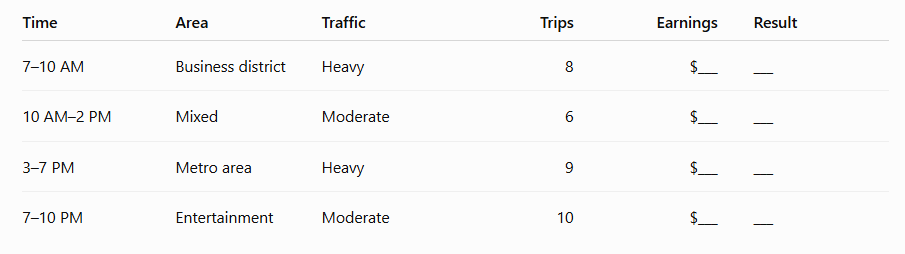
After several weeks, you may notice patterns that aren't obvious from a single day.
You might discover that:
Certain hours consistently produce better results.
Some areas create excessive idle time.
Certain routes become inefficient during rush hour.
Some demand periods are better after traffic begins to ease.
👉 Key takeaway: Your own driving data can help you understand your market better than assumptions alone.
⚠️ Common Traffic Mistakes Rideshare Drivers Make
Avoid these mistakes:
Ignoring rush-hour congestion.
Accepting long pickups through heavy traffic.
Driving across town to chase demand.
Ignoring event-related traffic.
Forgetting about airport congestion.
Focusing only on fare amounts.
Failing to track actual trip times.
Repositioning too frequently.
Driving aggressively to compensate for delays.
Continuing to drive when fatigue becomes a safety concern.
🎯 Pro Tips for Georgia Rideshare Drivers
Learn your area's recurring congestion patterns.
Plan around the major morning and afternoon peaks.
Check traffic before starting your shift.
Use your Driver app's demand and earnings tools.
Monitor major Georgia events.
Give yourself extra time during heavy traffic.
Avoid unnecessary repositioning.
Track earnings alongside driving time.
Compare different time periods.
Adjust your strategy based on your actual results.
💡 Pro Tip: Don't try to eliminate traffic from your driving strategy. Learn to anticipate it and make decisions that account for it.
🚙 A Reliable Vehicle Matters in Heavy Traffic
Traffic puts additional demands on a rideshare vehicle. Frequent stops, extended driving periods, and high mileage make reliability especially important for drivers who spend significant time on the road.
Evolution Rides4000 provides Georgia Uber and Lyft drivers with rideshare-ready premium sedans with:
Unlimited miles
Maintenance included
Professionally maintained vehicles
Clean interiors
Flexible rental options
Fast approval process
No hidden fees
A dependable vehicle can help you spend less time worrying about unexpected vehicle problems and more time focusing on your driving strategy.
🎉 Final Thoughts
Georgia traffic can have a major impact on rideshare efficiency. The same trip can produce very different results depending on when you drive, where you are, how congested the roads are, and what demand looks like around you.
Metro Atlanta's established peak periods—6–10 AM and 3–7 PM—are important starting points for understanding traffic patterns, but your own driving data is equally valuable.
The goal isn't to avoid every congested road. That's often impossible. Instead, learn to anticipate traffic, evaluate trip requests carefully, reduce unnecessary mileage, and plan your driving schedule around the conditions you're most likely to encounter.
When you combine traffic awareness with demand information, careful vehicle management, and consistent tracking, you can make more informed decisions about your time on the road.