How to Keep Business Expenses Organized Throughout the Year
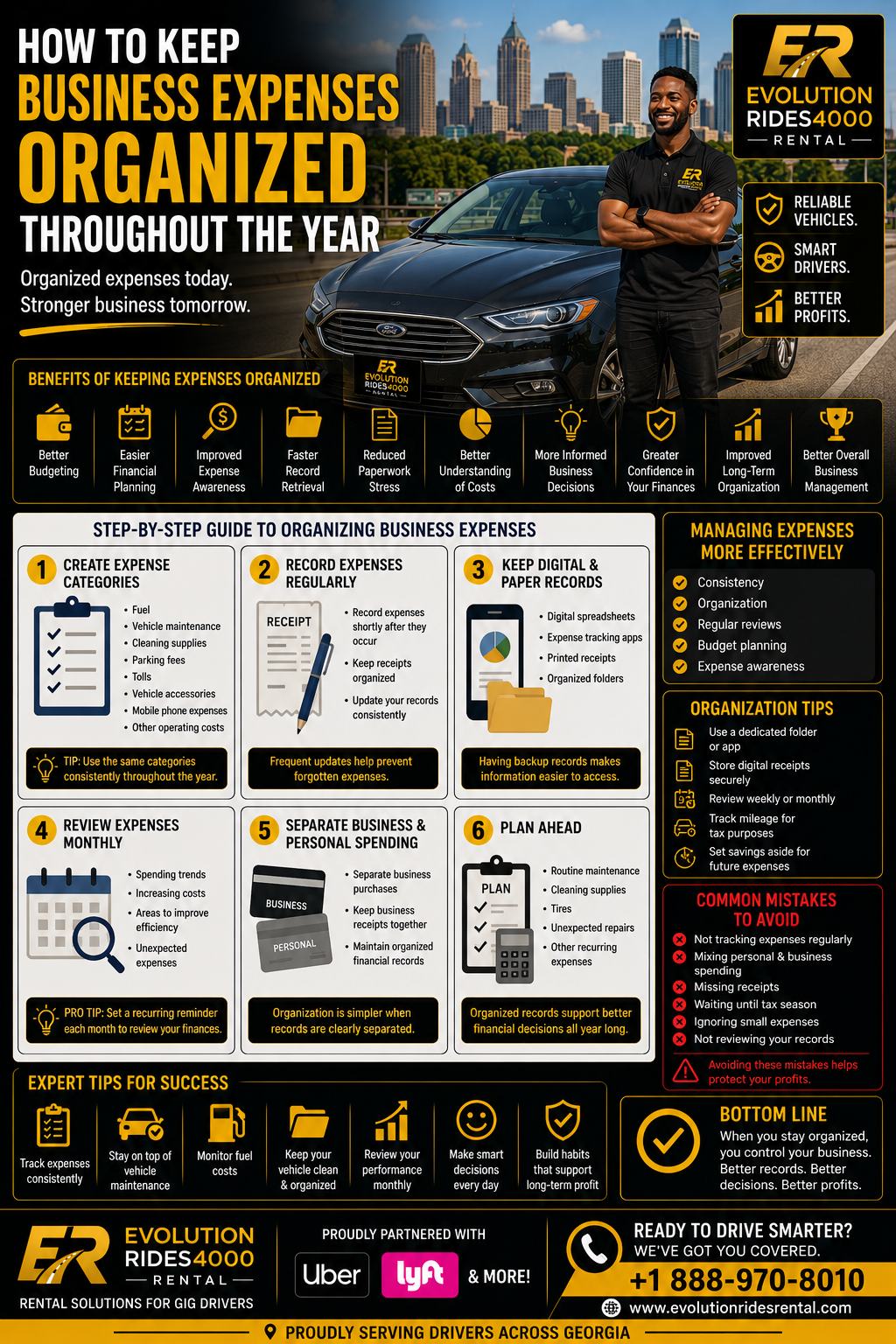
Driving for Uber or Lyft is more than just picking up passengers—it's also about managing your business responsibly. While many drivers focus on increasing their earnings, keeping track of business expenses is just as important for understanding overall profitability.
Without an organized system, it's easy to lose track of fuel purchases, maintenance costs, cleaning supplies, and other everyday expenses. Over time, these small costs can add up, making it difficult to understand how much you're actually earning from your rideshare business.
The good news is that organizing your expenses doesn't have to be complicated. A simple routine of recording expenses regularly and reviewing them consistently can help you stay organized throughout the year and make better financial decisions.
Whether you're driving part-time or full-time in Georgia, building good financial habits can help you manage your rideshare business more effectively and reduce unnecessary stress.
In this guide, you'll learn practical ways to organize your business expenses throughout the year so you can focus on driving while maintaining better control of your finances.
📘 Why Expense Organization Matters
Many rideshare drivers only think about expenses when reviewing their finances at the end of the month or during tax season. However, keeping records throughout the year is much easier than trying to remember everything later.
Organized expense tracking helps you understand where your money is going, identify spending patterns, and make informed decisions about your business.
For example, reviewing several months of fuel expenses may help you recognize opportunities to improve fuel efficiency or adjust your driving routine.
👉 Key takeaway: Tracking expenses consistently gives you a clearer picture of your rideshare business throughout the year.
🌟 Benefits of Keeping Expenses Organized
Maintaining organized financial records provides many advantages.
Benefits include:
Better budgeting.
Easier financial planning.
Improved expense awareness.
Faster record retrieval.
Reduced paperwork stress.
Better understanding of operating costs.
More informed business decisions.
Greater confidence in managing your finances.
Improved long-term organization.
Better overall business management.
Simple organization habits today can save significant time later.
👉 Key takeaway: Staying organized helps you manage your business more efficiently and confidently.
🛣️ Step-by-Step Guide to Organizing Business Expenses
Step 1: Create Expense Categories
Begin by organizing expenses into simple categories.
Examples include:
Fuel.
Vehicle maintenance.
Cleaning supplies.
Parking fees.
Tolls.
Vehicle accessories.
Mobile phone expenses (if applicable to your business).
Other operating costs.
Clear categories make records easier to review.
👉 Tip: Use the same categories consistently throughout the year.
Step 2: Record Expenses Regularly
Don't wait until the end of the month.
Instead:
Record expenses shortly after they occur.
Keep receipts organized.
Update your records consistently.
Frequent updates help prevent forgotten expenses.
Step 3: Keep Digital and Paper Records
Consider maintaining both formats when appropriate.
Examples include:
Digital spreadsheets.
Expense tracking apps.
Printed receipts.
Organized folders.
Having backup records can make information easier to access.
Step 4: Review Expenses Monthly
Schedule time each month to review your records.
Look for:
Spending trends.
Increasing costs.
Areas where you can improve efficiency.
Unexpected expenses.
Monthly reviews help you stay informed about your business performance.
💡 Pro Tip: Set a recurring reminder each month to review your finances.
Step 5: Separate Business and Personal Spending
Keeping business expenses separate makes records easier to manage.
Whenever practical:
Separate business purchases.
Keep business receipts together.
Maintain organized financial records.
Organization becomes much simpler when records are clearly separated.
Step 6: Plan Ahead
Financial organization isn't only about tracking past expenses.
Also plan for future costs such as:
Routine vehicle maintenance.
Cleaning supplies.
Tires.
Unexpected repairs.
Other recurring operating expenses.
Planning ahead reduces financial surprises.
👉 Key takeaway: Organized records support better financial decisions throughout the year.
💰 Managing Expenses More Effectively
Good financial management involves more than simply recording numbers.
Focus on:
Consistency.
Organization.
Regular reviews.
Budget planning.
Expense awareness.
Organization Tips
Update records weekly.
Store receipts safely.
Back up digital files.
Review spending trends regularly.
⚠️ Important: Good recordkeeping supports better financial planning, but consult a qualified tax professional for advice about tax reporting or deductions.
⚠️ Common Expense Tracking Mistakes
Avoid these common mistakes:
Waiting until the end of the year to organize expenses.
Losing receipts.
Mixing business and personal expenses.
Forgetting small purchases.
Never reviewing monthly spending.
Using inconsistent expense categories.
Failing to back up digital records.
Ignoring recurring expenses.
Not planning for future maintenance costs.
Assuming you'll remember every purchase later.
Avoiding these mistakes makes expense management much easier.
🎯 Expert Tips for Better Financial Organization
Record expenses consistently.
Review your finances every month.
Keep digital backups.
Organize receipts immediately.
Use consistent expense categories.
Separate business and personal records.
Plan ahead for recurring costs.
Track trends over time.
Keep your records simple and organized.
Make expense tracking part of your regular driving routine.
💡 Pro Tip: Spending just a few minutes each week updating your expense records is much easier than trying to organize an entire year's worth of transactions at once.
✅ Best Practices for Keeping Business Expenses Organized Throughout the Year
Staying organized with your business expenses is one of the best habits you can develop as an Uber or Lyft driver. Consistent recordkeeping helps you understand your operating costs, create realistic budgets, and make informed financial decisions throughout the year. Instead of trying to organize months of receipts at once, a simple routine can keep everything manageable.
Follow these best practices to stay organized:
Record your business expenses regularly instead of waiting until the end of the month.
Create consistent categories for fuel, maintenance, cleaning supplies, parking, tolls, and other operating costs.
Save receipts in both digital and paper formats whenever possible.
Review your expenses at least once a month.
Separate business-related purchases from personal spending.
Budget for routine vehicle maintenance and recurring expenses.
Back up digital records to avoid losing important information.
Keep your expense records simple and easy to update.
Review spending trends to identify opportunities to reduce costs.
Make expense tracking part of your weekly routine.
For example, setting aside 10 minutes at the end of each week to record receipts and review expenses can help you stay organized year-round and avoid the stress of catching up later.
👉 Key takeaway: Small, consistent recordkeeping habits make managing your rideshare business easier and help you make smarter financial decisions.
❓ Frequently Asked Questions
1. Why should rideshare drivers track business expenses?
Tracking expenses helps you understand your operating costs, monitor profitability, create budgets, and stay organized throughout the year.
2. What expenses should I keep records of?
Common business expenses may include fuel, vehicle maintenance, cleaning supplies, parking fees, tolls, vehicle accessories, and other operating costs related to your rideshare business.
3. How often should I update my expense records?
Updating your records weekly or shortly after making a business-related purchase helps keep your information accurate and prevents forgotten expenses.
4. Should I keep receipts?
Yes. Keeping receipts provides documentation for your records and makes it easier to verify expenses when reviewing your finances.
5. Is it better to use digital or paper records?
Many drivers use a combination of both. Digital records are easy to organize and back up, while paper receipts can provide additional documentation when needed.
6. Why should I separate business and personal expenses?
Separating expenses makes your financial records easier to organize, review, and understand throughout the year.
7. How often should I review my expenses?
Reviewing your records monthly helps you monitor spending patterns, identify recurring costs, and make informed financial decisions.
8. Can tracking expenses help improve profitability?
Yes. Understanding where your money is going can help you identify opportunities to reduce unnecessary spending and better manage your operating costs.
9. What's the biggest expense tracking mistake drivers make?
Many drivers wait until the end of the year to organize their expenses, making the process much more difficult and increasing the chance of missing important records.
10. Should I budget for future vehicle expenses?
Yes. Planning ahead for routine maintenance and other recurring costs can help you avoid unexpected financial surprises.
11. What's the easiest way to stay organized?
Use consistent expense categories, update your records regularly, save receipts, and schedule a recurring time each week or month to review your finances.
12. Do I need professional advice about taxes?
Expense tracking is helpful for organizing your business finances, but for questions about tax reporting, deductions, or filing requirements, it's best to consult a qualified tax professional.
🚙 Why Choose Evolution Rides4000?
Managing business expenses becomes easier when your vehicle is reliable and professionally maintained. At Evolution Rides4000, we help Georgia Uber and Lyft drivers reduce the uncertainty of vehicle ownership by providing rideshare-ready premium sedans that support consistent daily driving.
Drivers choose Evolution Rides4000 because we offer:
Fast approval process
Rideshare-ready premium sedans
Unlimited miles
Maintenance included
Clean and professionally maintained interiors
Fuel-efficient vehicles
Flexible rental options
Friendly customer support
Easy onboarding process
No hidden fees
With dependable vehicles and included maintenance, you can spend more time focusing on your driving goals and managing your business efficiently.
🎉 Final Thoughts
Keeping your business expenses organized is an important part of running a successful rideshare business. Recording expenses regularly, reviewing your finances each month, and maintaining organized records can help you better understand your operating costs and make more informed financial decisions throughout the year.
Remember that good financial organization isn't about creating a complicated system—it's about building simple habits that you can maintain consistently. Over time, these habits can save you time, reduce stress, and give you a clearer picture of your business performance.
If you're looking for a dependable vehicle to support your rideshare business, Evolution Rides4000 offers rideshare-ready premium sedans with unlimited miles, included maintenance, flexible rental options, and a fast approval process—helping you focus on growing your business with confidence.