How to Reduce Downtime Between Rides and Stay Profitable
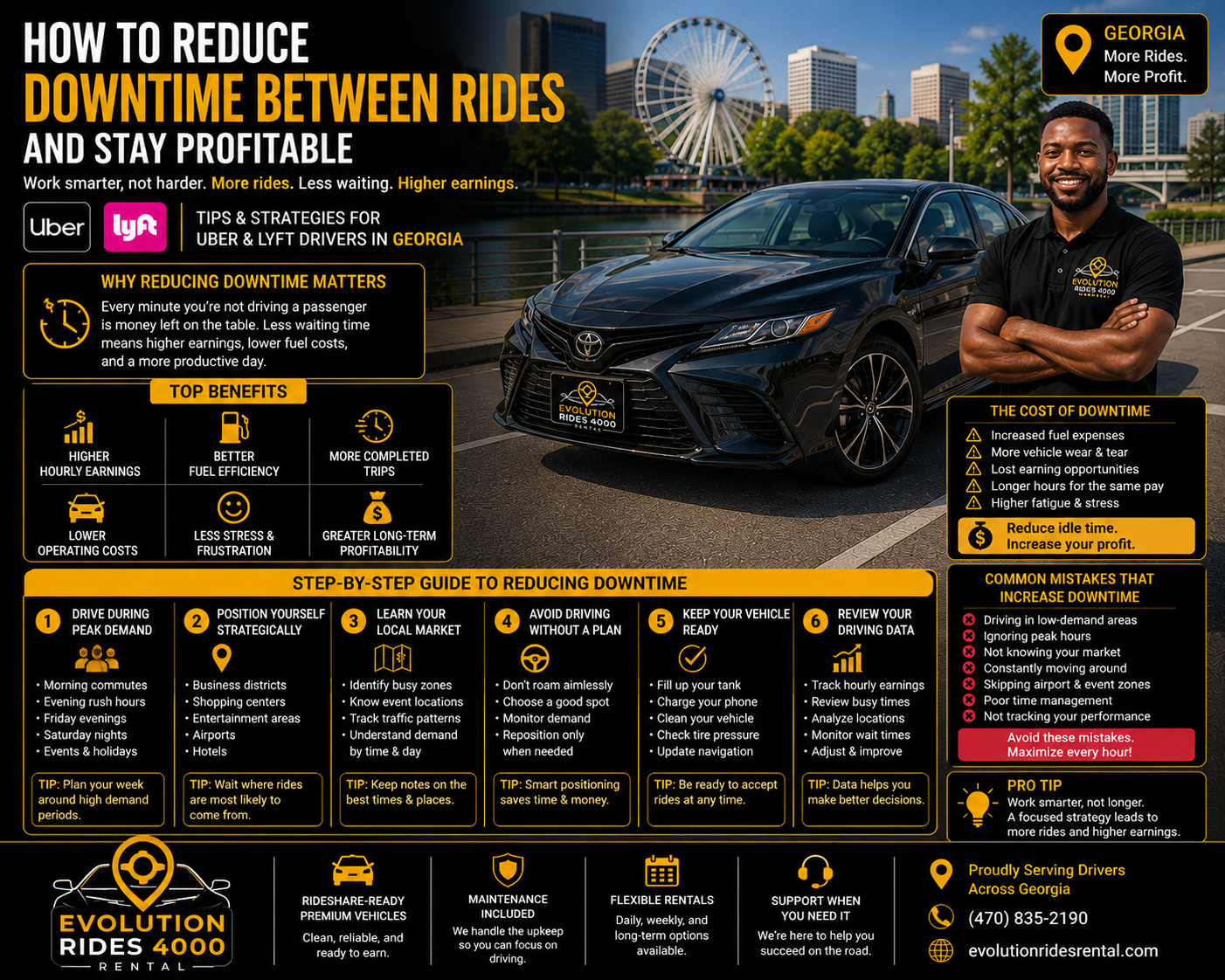
One of the biggest challenges rideshare drivers face isn't completing trips—it's the time spent waiting for the next one. Sitting in a parking lot or driving around without passengers can quickly reduce your hourly earnings, increase fuel costs, and make your day less productive.
Many new Uber and Lyft drivers assume that staying online is enough to keep ride requests coming. In reality, where and when you drive, how you position yourself, and how well you understand demand all play a major role in reducing downtime.
The good news is that idle time can often be minimized with the right strategy. By learning how to position yourself in high-demand areas, planning your schedule, and making smart driving decisions, you can spend more time earning and less time waiting.
In this guide, you'll discover practical ways to reduce downtime between rides, improve your efficiency, and build a more profitable rideshare business in Georgia.
📘 Why Reducing Downtime Matters
Downtime is any period when you're available to accept rides but aren't earning because you don't have a passenger. While short breaks are normal, excessive idle time reduces your overall profitability.
Every minute spent waiting without a trip represents time that could have been generating income. It can also lead to unnecessary fuel consumption if you're constantly driving around searching for passengers.
Experienced drivers understand that profitability isn't just about completing more rides—it's about making the most of every hour they're on the road.
For example, a driver who completes four rides in four hours with very little waiting may earn more than a driver who completes the same number of rides over six hours because of long periods of inactivity.
👉 Key takeaway: Reducing downtime helps increase your hourly earnings while lowering unnecessary operating costs.
🌟 Benefits of Reducing Downtime
Keeping your wheels moving with paying passengers instead of waiting for requests offers several advantages.
Benefits include:
Higher hourly earnings.
Better fuel efficiency.
Reduced unnecessary mileage.
More completed trips.
Increased daily productivity.
Better use of your driving schedule.
Lower operating costs.
Less frustration during slow periods.
Improved work-life balance.
Greater long-term profitability.
Imagine finishing your driving day after completing the same number of rides in fewer hours. By reducing idle time, you can either earn more during the same shift or finish earlier and enjoy more personal time.
👉 Key takeaway: Every minute you save between rides contributes to a more efficient and profitable driving experience.
🛣️ Step-by-Step Guide to Reducing Downtime Between Rides
Step 1: Drive During Peak Demand
The easiest way to reduce waiting time is to drive when more passengers are requesting rides.
Popular high-demand periods often include:
Morning commutes.
Evening rush hours.
Friday evenings.
Saturday nights.
Local events.
Airport travel periods.
Driving during these times increases your chances of receiving ride requests quickly.
👉 Tip: Build your weekly schedule around periods of consistently high demand instead of driving at random hours.
Step 2: Position Yourself Strategically
Where you wait for your next ride matters.
Instead of parking in quiet residential neighborhoods, consider positioning yourself near areas with consistent passenger activity, such as:
Business districts.
Shopping centers.
Entertainment venues.
Universities.
Airports.
Hotels.
Choosing the right location helps reduce the distance between completed trips and your next pickup.
Step 3: Learn Your Local Market
Every city has its own traffic patterns and busy zones.
Spend time identifying:
Areas with frequent ride requests.
Times when demand increases.
Roads that experience heavy congestion.
Event venues that generate rides.
The better you understand your local market, the easier it becomes to stay productive throughout your shift.
💡 Pro Tip: Keep notes on your busiest locations and revisit them during future shifts.
Step 4: Avoid Driving Without a Plan
Driving aimlessly while waiting for requests increases fuel costs and unnecessary mileage.
Instead:
Choose a strategic waiting area.
Monitor nearby demand.
Stay patient.
Reposition only when necessary.
Smart positioning is usually more profitable than constantly driving around searching for passengers.
Step 5: Keep Your Vehicle Ready
Unexpected maintenance issues or low fuel can interrupt your momentum.
Before every shift:
Fill your fuel tank.
Charge your phone.
Clean your vehicle.
Check tire pressure.
Review navigation updates.
Preparation reduces interruptions and allows you to accept ride requests immediately.
Step 6: Review Your Driving Data
Successful drivers analyze their performance regularly.
Review:
Hourly earnings.
Busy driving times.
High-demand locations.
Fuel consumption.
Average waiting times.
Small adjustments based on real data can significantly improve your efficiency over time.
👉 Key takeaway: Strategic planning and understanding demand help you spend more time transporting passengers and less time waiting.
💰 The Cost of Downtime
Many drivers underestimate how expensive idle time can become over the course of a week.
Downtime may increase:
Fuel expenses.
Vehicle wear.
Lost earning opportunities.
Total hours worked.
Driver fatigue.
Reducing idle time allows you to complete more productive trips without necessarily working longer hours.
Budgeting Tips
Track your hourly earnings.
Compare busy and slow shifts.
Monitor fuel usage.
Review weekly profitability.
⚠️ Important: Focus on earning more per hour—not simply spending more hours online.
⚠️ Common Mistakes That Increase Downtime
Many new drivers unknowingly create more waiting time through poor planning.
Avoid these common mistakes:
Driving during consistently slow hours.
Waiting in low-demand areas.
Driving aimlessly between requests.
Ignoring local events.
Starting shifts with low fuel.
Failing to learn busy neighborhoods.
Not reviewing driving performance.
Ignoring traffic conditions.
Refusing to adjust schedules.
Focusing only on trip quantity instead of hourly profitability.
Correcting these habits can lead to noticeable improvements in your weekly income.
🎯 Expert Tips for Staying Productive
Drive during predictable peak hours.
Position yourself near consistent demand.
Learn airport procedures.
Keep your premium sedan clean and ready.
Monitor your hourly earnings.
Avoid unnecessary driving.
Stay flexible during special events.
Watch local traffic conditions.
Review your driving data every week.
Continuously improve your strategy based on experience.
💡 Pro Tip: The goal isn't simply to complete more rides—it's to spend more of your driving time with paying passengers instead of waiting.
✅ Best Practices for Reducing Downtime and Increasing Profitability
Reducing downtime isn't about staying busy every minute—it's about making smarter decisions throughout your shift. Successful rideshare drivers know where to position themselves, when to drive, and how to adapt to changing demand.
Follow these best practices to spend less time waiting and more time earning:
Plan your driving schedule around peak demand.
Position yourself near areas with consistent ride requests.
Avoid unnecessary driving between trips.
Learn the busiest neighborhoods in your market.
Monitor local events that may increase demand.
Keep your premium sedan fueled and ready before every shift.
Review your earnings and downtime weekly.
Stay flexible and adjust your location when demand changes.
Keep your navigation app updated.
Maintain your vehicle to avoid unexpected interruptions.
For example, instead of immediately driving across town after dropping off a passenger, wait briefly in a nearby high-demand area if historical demand suggests another request is likely. This approach can reduce fuel consumption while increasing your chances of receiving your next trip quickly.
👉 Key takeaway: Smart planning and strategic positioning help you maximize your time on the road and improve your overall profitability.
❓ Frequently Asked Questions
1. What is downtime in rideshare driving?
Downtime is the period between trips when you're available to accept rides but don't have a passenger. Reducing downtime helps improve your hourly earnings and overall efficiency.
2. Why does downtime reduce profits?
Even if you're not transporting passengers, your vehicle may still consume fuel, accumulate mileage, and experience wear. Long periods without ride requests reduce your earnings per hour.
3. What's the best way to reduce downtime?
Drive during high-demand hours, position yourself in busy areas, avoid unnecessary driving, and regularly review your driving data to identify your most productive locations and schedules.
4. Should I drive around while waiting for ride requests?
In most cases, no. Driving without a strategy can increase fuel costs and unnecessary mileage. Waiting in a location with consistent demand is often a more efficient approach.
5. How do I know which areas have the highest demand?
Over time, you'll notice patterns based on completed trips. Business districts, airports, hotels, entertainment venues, and shopping centers often generate regular ride requests during busy periods.
6. Do local events affect ride demand?
Yes. Concerts, sporting events, festivals, conventions, and community gatherings often create temporary increases in rideshare demand before and after the event.
7. Can vehicle maintenance help reduce downtime?
Absolutely. A well-maintained vehicle is less likely to experience unexpected mechanical problems that force you to end your shift early or miss profitable driving opportunities.
8. How can I track my productivity?
Review your weekly earnings, total driving hours, completed trips, fuel expenses, and average waiting time between rides. These metrics help you identify opportunities for improvement.
9. Is it better to work longer hours or smarter hours?
Working during high-demand periods is generally more profitable than simply staying online longer during slow periods. Focus on earning more per hour rather than spending more hours driving.
10. Should I always accept every ride request?
Not necessarily. Consider your location, fuel level, schedule, and overall profitability. Accepting every request without evaluating your situation may not always be the most efficient strategy.
11. How important is learning my local market?
Understanding traffic patterns, busy neighborhoods, and seasonal demand helps you position yourself more effectively and reduce unnecessary waiting between rides.
12. What's the biggest mistake new rideshare drivers make?
One of the most common mistakes is driving without a plan. Successful drivers build schedules around demand, monitor their performance, and continuously adjust their strategy to improve profitability.
🚙 Why Choose Evolution Rides4000?
Reducing downtime starts with having a dependable vehicle that's ready whenever ride requests come in. Mechanical issues, excessive fuel costs, or an unreliable car can quickly interrupt your day and reduce your earning potential.
That's why many Georgia rideshare drivers choose Evolution Rides4000.
With rideshare-ready premium sedans, you can focus on staying productive instead of worrying about unexpected maintenance or whether your vehicle is ready for another long shift.
Drivers benefit from:
Fast approval process
Rideshare-ready premium sedans
Unlimited miles
Maintenance included
Clean and professionally maintained interiors
Fuel-efficient vehicles
Flexible rental options
Friendly customer support
Easy onboarding process
No hidden fees
Whether you're working toward full-time rideshare income or driving part-time to earn extra money, Evolution Rides4000 provides reliable vehicles designed to help you spend more time on the road and less time dealing with vehicle-related interruptions.
🎉 Final Thoughts
Reducing downtime is one of the most effective ways to improve your rideshare earnings without increasing your working hours. By driving during busy periods, positioning yourself strategically, learning your local market, and maintaining your vehicle, you can complete more productive trips while lowering unnecessary expenses.
Remember that successful rideshare driving isn't about staying online all day—it's about using your time wisely. Every minute you reduce between trips helps improve your hourly income and supports long-term profitability.
If you're looking for a dependable vehicle that helps you stay focused on earning, Evolution Rides4000 offers rideshare-ready premium sedans with unlimited miles, included maintenance, flexible rental options, and a fast approval process—making it easier to keep moving and maximize every shift.