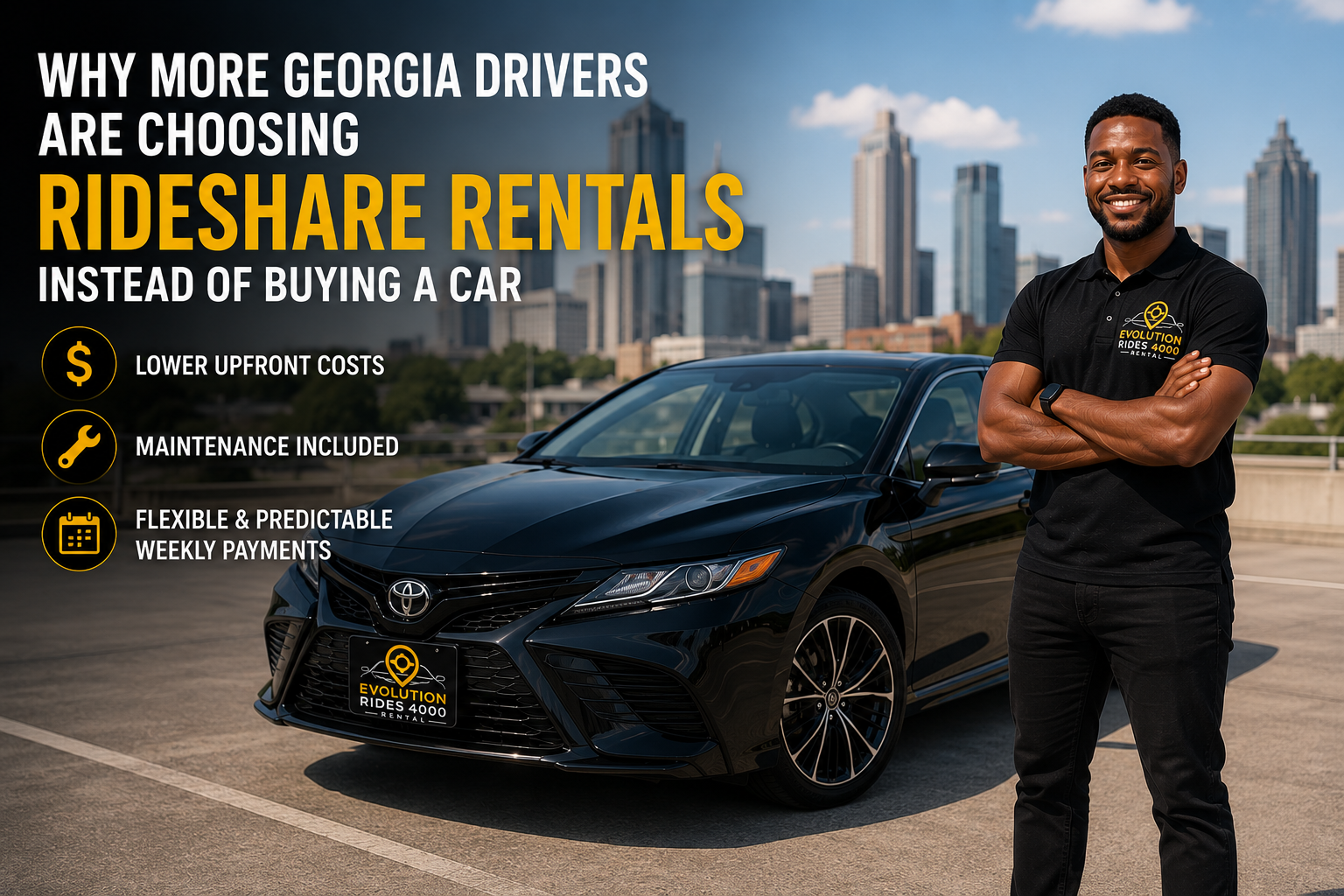
Why More Georgia Drivers Are Choosing Rideshare Rentals Instead of Buying a Car
Starting a rideshare career with Uber or Lyft is an exciting opportunity, but one of the biggest decisions new drivers face is whether to buy a vehicle or rent one. Many people assume purchasing a car is always the smarter financial choice because they will eventually own the vehicle. While that may work for some drivers, it isn't always the best option—especially for those who want to start earning quickly without taking on a large financial commitment.
In recent years, more Georgia drivers have chosen rideshare rentals because they offer flexibility, lower upfront costs, and fewer maintenance concerns. Instead of worrying about long-term loans or unexpected repair bills, drivers can focus on building their income and gaining experience on the road.
In this guide, you'll learn why rideshare rentals are becoming increasingly popular, how they compare to buying a car, and what factors you should consider before making your decision.
🚘 Why More Drivers Are Choosing Rideshare Rentals
The rideshare industry has changed significantly over the past few years. Many drivers now view their vehicle as a business tool rather than a long-term personal investment.
Buying a car often involves:
A large down payment.
Monthly loan payments.
Long-term financial commitments.
Maintenance responsibilities.
Depreciation.
A rideshare rental can reduce many of these concerns by allowing drivers to begin working without purchasing a vehicle outright.
For someone who wants to start driving as soon as possible, renting can provide a faster path to earning income while avoiding many of the financial risks associated with ownership.
👉 Key takeaway: Renting allows many new rideshare drivers to focus on earning first instead of making a major vehicle purchase.
🌟 Benefits of Renting Instead of Buying
Choosing a rideshare rental offers several practical advantages, especially for new drivers.
Benefits include:
Lower upfront costs.
Faster access to a rideshare-ready vehicle.
Greater financial flexibility.
Reduced responsibility for maintenance.
Predictable weekly expenses.
No concerns about vehicle depreciation.
Easier entry into rideshare driving.
Opportunity to gain experience before purchasing a vehicle.
Reliable transportation for daily driving.
Less financial pressure during the early stages of your rideshare career.
Many drivers appreciate the ability to start earning without waiting months to save for a down payment or qualify for financing.
👉 Key takeaway: Renting allows drivers to begin generating income sooner while keeping financial commitments more manageable.
🛣️ Step-by-Step Guide to Choosing Between Renting and Buying
Step 1: Evaluate Your Financial Situation
Before making a decision, review your current financial position.
Consider:
Available savings.
Monthly budget.
Existing debt.
Emergency fund.
Expected rideshare income.
Understanding your finances helps determine which option best fits your goals.
👉 Tip: Avoid stretching your budget too thin just to purchase a vehicle.
Step 2: Compare Upfront Costs
Buying a vehicle usually requires:
Down payment.
Taxes and registration.
Loan approval.
Insurance.
Initial maintenance.
A rideshare rental often requires much less money upfront, allowing you to begin driving sooner.
Step 3: Consider Maintenance Responsibilities
Vehicle ownership means you're responsible for routine maintenance and unexpected repairs.
These may include:
Oil changes.
Brake service.
Tire replacement.
Battery replacement.
Mechanical repairs.
Some rideshare rental programs include maintenance, making it easier to predict your operating costs.
💡 Pro Tip: Lower maintenance responsibilities allow you to spend more time focused on driving instead of scheduling repairs.
Step 4: Think About Flexibility
Life circumstances change.
Ask yourself:
Will you drive full-time or part-time?
Are you testing rideshare as a new career?
Do you want long-term vehicle ownership?
How important is financial flexibility?
Renting gives many drivers the opportunity to evaluate rideshare driving before committing to a long-term auto loan.
Step 5: Calculate Total Monthly Costs
Don't compare only monthly payments.
Also include:
Fuel.
Insurance.
Maintenance.
Registration.
Vehicle depreciation.
Financing costs.
A complete financial comparison provides a much clearer picture of your true operating expenses.
Step 6: Consider Your Long-Term Goals
Some drivers eventually decide to purchase a vehicle after gaining experience and building stable rideshare income.
Others continue renting because they value flexibility and predictable expenses.
There's no universal answer—the best choice depends on your financial situation, driving goals, and personal preferences.
👉 Key takeaway: Make your decision based on total costs, flexibility, and your long-term financial objectives rather than focusing on one expense alone.
💰 Understanding the Costs
Whether you rent or buy, operating a rideshare business involves ongoing expenses.
Common costs include:
Weekly rental or loan payments.
Fuel.
Insurance.
Maintenance.
Car washes.
Phone service.
Cleaning supplies.
Budgeting Tips
Create a monthly operating budget.
Track every business expense.
Set aside money for unexpected costs.
Review your profitability regularly.
⚠️ Important: The lowest monthly payment doesn't always result in the highest overall profit. Always consider your total operating costs.
⚠️ Common Mistakes When Choosing a Vehicle
Avoid these common mistakes before making your decision:
Comparing only monthly payments.
Ignoring maintenance expenses.
Underestimating fuel costs.
Not creating a realistic budget.
Buying more vehicle than you need.
Forgetting about depreciation.
Failing to calculate total ownership costs.
Making decisions based on emotion instead of numbers.
Ignoring flexibility needs.
Rushing into a long-term financial commitment.
Taking time to compare your options carefully can help you avoid unnecessary financial stress later.
🎯 Expert Tips for Choosing the Right Option
Calculate your total monthly costs.
Prioritize flexibility if you're new to rideshare.
Track your weekly profits.
Avoid taking on unnecessary debt.
Choose a dependable, fuel-efficient vehicle.
Plan for future maintenance expenses.
Review your financial goals regularly.
Treat your vehicle as a business asset.
Focus on profitability rather than appearances.
Reevaluate your decision as your rideshare career grows.
💡 Pro Tip: The best vehicle decision is the one that supports your financial goals while allowing you to earn consistently and confidently.
✅ Best Practices for Choosing Between Renting and Buying
Deciding whether to rent or buy a vehicle for rideshare driving isn't just a financial decision—it's a business decision. The right choice depends on your goals, budget, driving experience, and how much flexibility you want as your rideshare career grows.
Follow these best practices before making your decision:
Compare your total monthly costs instead of only the payment amount.
Build a realistic budget that includes all operating expenses.
Consider how many hours you plan to drive each week.
Choose a dependable, fuel-efficient premium sedan.
Factor in maintenance and repair responsibilities.
Leave room in your budget for unexpected expenses.
Track your rideshare income from the beginning.
Reevaluate your financial goals every few months.
Treat your vehicle as a business asset.
Choose the option that supports long-term profitability, not just short-term savings.
For example, someone who is new to rideshare driving may benefit from renting first to gain experience before deciding whether purchasing a vehicle makes financial sense. This approach allows drivers to better understand their earning potential before making a long-term commitment.
👉 Key takeaway: Focus on the option that helps you earn consistently while keeping your financial risk manageable.
❓ Frequently Asked Questions
1. Is renting a vehicle better than buying for new rideshare drivers?
It depends on your financial situation and goals. Many new drivers choose to rent because it allows them to start earning sooner without committing to a large down payment or long-term auto loan.
2. Why are more Georgia drivers choosing rideshare rentals?
Many drivers appreciate the flexibility, predictable expenses, and ability to begin driving quickly. Renting also allows them to avoid concerns such as vehicle depreciation and major repair costs that often come with ownership.
3. Is buying a car always cheaper in the long run?
Not necessarily. While ownership builds equity over time, buyers must also account for financing, insurance, maintenance, repairs, depreciation, and registration costs. Comparing total expenses provides a more accurate picture than looking at monthly payments alone.
4. Can renting help me start driving sooner?
Yes. Many rideshare rental programs provide rideshare-ready vehicles, allowing qualified drivers to begin accepting trips much faster than waiting to purchase and prepare a personal vehicle.
5. What expenses should I compare before deciding?
Consider rental or loan payments, fuel, insurance, maintenance, registration, cleaning supplies, phone expenses, and any other business-related costs associated with driving for Uber or Lyft.
6. Is maintenance included with every rideshare rental?
Rental programs vary. Some include routine maintenance, while others may have different coverage. Always review the rental agreement so you understand exactly what services are included.
7. What if I'm only planning to drive part-time?
If you're unsure about your long-term rideshare plans, renting can provide additional flexibility while you determine whether driving fits your schedule and financial goals.
8. Does renting reduce financial risk?
For many drivers, yes. Renting avoids taking on a long-term vehicle loan and may reduce unexpected maintenance expenses, making it easier to manage monthly finances.
9. Should I buy a vehicle after gaining rideshare experience?
Some drivers choose to purchase a vehicle after building consistent income and learning their operating costs. Others continue renting because they value predictable expenses and flexibility.
10. How important is choosing a fuel-efficient vehicle?
Fuel is one of the largest operating expenses for rideshare drivers. A fuel-efficient premium sedan can help reduce ongoing costs and improve your monthly profitability.
11. What's the biggest mistake drivers make when choosing a vehicle?
Many people focus only on the monthly payment instead of calculating the total cost of ownership or rental. Looking at the complete financial picture helps you make a better long-term decision.
12. How can I decide which option is right for me?
Review your budget, driving goals, expected income, and comfort with long-term financial commitments. Comparing total costs and evaluating your personal circumstances will help you make an informed decision.
🚙 Why Choose Evolution Rides4000?
Starting your rideshare journey is easier when you have a dependable vehicle that's ready to work from day one. Instead of worrying about buying a car, qualifying for financing, or handling unexpected repairs, you can focus on building your income.
That's why many Georgia drivers choose Evolution Rides4000.
With rideshare-ready premium sedans and maintenance included, Evolution Rides4000 helps drivers spend less time dealing with vehicle concerns and more time accepting trips.
Drivers enjoy:
Fast approval process
Rideshare-ready premium sedans
Unlimited miles
Maintenance included
Clean and professionally maintained interiors
Fuel-efficient vehicles
Flexible rental options
Friendly customer support
Easy onboarding process
No hidden fees
Whether you're starting your first week as a rideshare driver or looking for a more flexible alternative to vehicle ownership, Evolution Rides4000 provides reliable rental options designed to help you get on the road quickly and confidently.
🎉 Final Thoughts
Choosing between renting and buying is one of the first major decisions every rideshare driver will make. While buying may be the right choice for some, many Georgia drivers are discovering that renting offers greater flexibility, lower upfront costs, and an easier way to begin earning without a long-term financial commitment.
The most important step is to evaluate your complete financial picture rather than focusing on a single expense. Consider your budget, driving goals, expected operating costs, and how much flexibility you want as your rideshare business grows.
If you're ready to start driving without the challenges of purchasing a vehicle, Evolution Rides4000 offers rideshare-ready premium sedans with unlimited miles, included maintenance, flexible rental options, and a fast approval process—making it easier to focus on what matters most: getting on the road and maximizing your earning potential.